
The starling is often an underrated bird.
Its Latin name is Sturnus vulgaris, and a collective noun for a flock of starlings is a 'filth'—a term suggesting a commonplace garden creature or a nuisance.
So why did we choose the starling as the namesake and inspiration for Starling Arts?
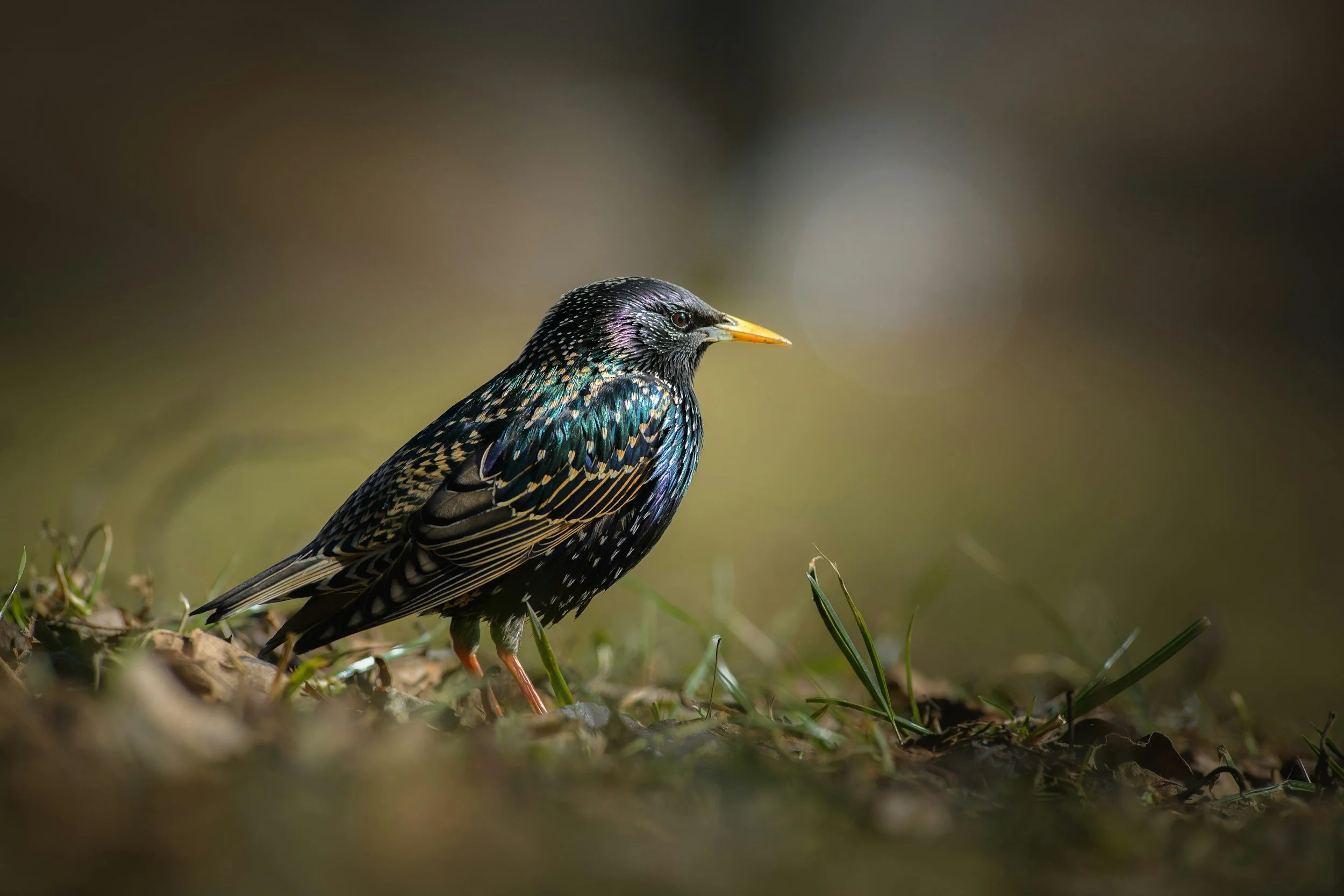
Starlings have far more to them than first meets the eye. From a distance, they appear simple and black. Look closer at their feathers, however, and you will notice subtle shifts of colour—hints of deep green, iridescent purple, and vibrant teal. Pair that with a proud posture and alert stance, and you have a striking bird.
As lovely as a single starling is, their true wonder is revealed when they gather together.
1. Community, Connection, and Collaboration
Few natural spectacles are as breathtaking as a starling murmuration. Watching thousands of birds flock together creates a mesmerizing display of effortless, synchronized movement—darting across the sky in seconds without a single collision or hesitation.
That effortless coordination represents true community spirit, connection, and collaboration—the exact values we strive for when bringing people together to sing. Starlings are highly social creatures whether on the ground or in the air, making them the perfect symbol for an organisation where people and community are at the heart of everything we do.
2. Dynamic Songbirds and Mimics
It is a little-known fact that starlings are extraordinary songbirds. They are brilliant mimics, often heard imitating other birds, household sounds, or even human speech patterns. Wolfgang Amadeus Mozart famously kept a pet starling for three years after hearing it whistle a theme from his Piano Concerto No. 17.
So evolved is the starling's musicality that individual birds can recognize one another purely by their distinct calls. Scientists have even studied starling vocalizations to better understand the origins of human speech.
3. Stage Presence and Confidence
Far from shy and retiring, the RSPB describes starlings as "noisy and gregarious." They possess all the stage presence, energy, and vocal spirit of a West End or Broadway star!
Like our namesake, human 'Starlings' are not afraid to use their voices. Everyone who sings with us quickly discovers that the physical, mental, and social benefits of group singing far outweigh the initial fear of being heard. Starlings have a look, an attitude, and a voice built for performance—which is why you will often see our choirs dressed in black and teal, singing together across London and beyond.
4. No Auditions, Just the Flock
Most importantly, anyone can be a Starling.
Just like our feathered friends, Starling Arts involves no elitism, auditions, or initiation ceremonies. We bring people together through accessible music-making, helping individuals build confidence, improve their breath control, and take flight. Together, we create a unified group sound that would never be possible without the strength of the whole flock.
Find Your Voice with a Starling Arts Project
Looking to boost your wellbeing, build lung health, and experience the joy of group music?
Explore our community, school and workplace programmes and community choir projects. Our sessions combine accessible vocal exercises, breath work, and dynamic group harmonies in a welcoming, supportive environment. Contact info@starlingarts.com to discuss!