
Getting a group to focus is an essential skill, whether you are running a business meeting, leading a workshop, or facilitating a community arts activity.
Spending just a few minutes at the start of a session helps establish concentration, physical alignment, and strong interpersonal connections. These five tried-and-tested techniques will settle excess energy and bring focus to your groups.
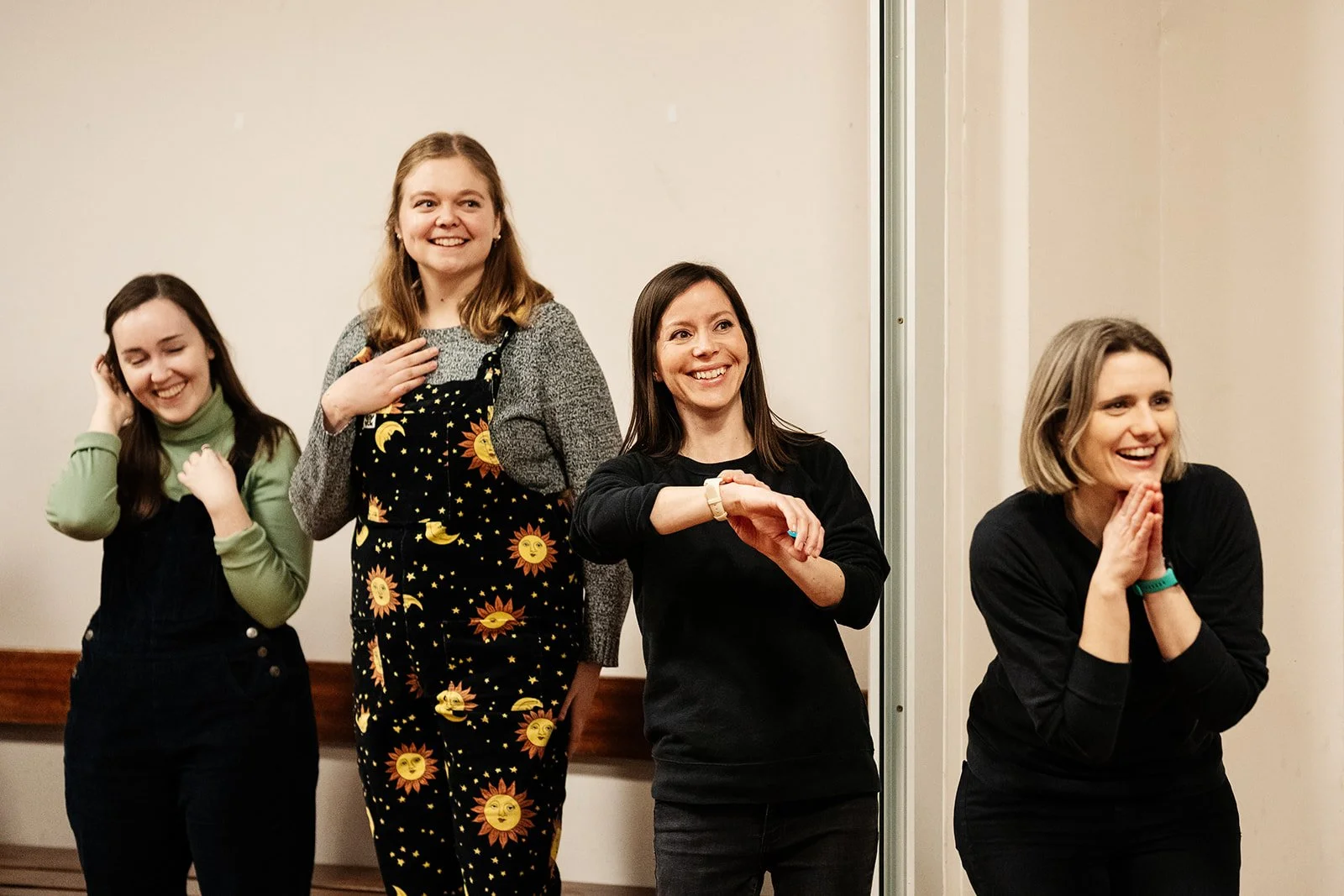
The Starling Arts team leading a counting exercise in a workshop
1. Counting Time
This short exercise calms a rowdy room and sets a quiet, concentrated tone for a productive session.
How to do it: Ensure there is no audible clock ticking in the room. Ask your group to close their eyes while you get a timer ready. From the moment you say "Go", everyone must silently count 30 seconds in their heads and raise a hand when they believe the time has passed.
Why it works: It forces immediate internal stillness and sensory focus. You can acknowledge those closest to the exact time or award a small prize to keep it engaging!
2. Structured Group Breathing
Structured breathing is one of the most effective tools for settling group anxiety, physical tension, and scattered energy.
How to do it: Guide the group to breathe in through the nose for 4 seconds, hold for 4 seconds, and exhale smoothly for 8 seconds. Count aloud with them for the first few rounds. Gradually increase the counts to a 5/5/10 pattern, and finally ask individuals to continue the counting silently at their own pace.
Why it works: Extending the exhalation triggers the parasympathetic nervous system, slowing the heart rate and physically grounding the room.
3. The Guided Body Scan
A body scan brings a group into the present moment, releasing external distractions, worries, and unhelpful thoughts before you begin work.
How to do it: Ask the group to close their eyes and focus their attention on one body part at a time, observing any sensations or tension. Begin at the feet and slowly work upward through the calves, knees, thighs, abdomen, chest, shoulders, hands, and face. Pay special attention to releasing tension in the jaw, lips, cheeks, and brow. Conclude with three long, deep breaths.
Why it works: Reconnecting with the physical body prepares participants for active engagement—especially valuable for singers, public speakers, or performers.
4. Count to Three (Pair Focus Game)
This simple counting exercise challenges vocal, physical, and mental coordination in a light-hearted, interactive way.
How to do it: Split the group into pairs. Partners alternate counting from 1 to 3 continuously (Player A: "One", Player B: "Two", Player A: "Three", Player B: "One", and so on), keeping a steady rhythm. Once comfortable, replace number 1 with a clap, number 2 with a snap, or number 3 with a sound effect.
Why it works: It demands active listening, presence, and eye contact, encouraging teamwork and dynamic group focus.
5. Moving in Unison
Walking in time with others requires spatial awareness and non-verbal communication—two key elements of successful group collaboration.
How to do it: Ask the group to walk freely around the room. Next, instruct them to match their footstep rhythm and walking speed with those around them until the entire room moves in unison. You can call out changes in speed or allow them to self-manage silently for an added challenge.
Why it works: It builds non-verbal group cohesion and spatial awareness, making it an excellent warm-up for stage work or collaborative team workshops.
Experience the Power of Group Focus
Looking to improve breath control, build confidence, and experience the wellbeing benefits of group singing?
Contact us at info@starlingarts.com to chat about our group workshops.